
When we talk about powder coatings today as a mature and well-understood technology, it’s easy to forget that just twenty years ago, it was a virtually unknown field in the Kazakh market. In the early 2000s, the language, concepts, and culture of powder coatings application were virtually nonexistent in the professional community. And looking back, it becomes clear: we weren’t starting a business — we were laying the foundation of a new market.

Larissa Semenchuk
General Director of Asiacolor
2003 – Without a Map or Instructions
Our journey began in 2003 with Verirs, which at the time was the first and only supplier of powder coatings in Almaty. It was a time when the market not only didn’t understand what powder coating was, it didn’t even see its practical value.
We were just getting to know this technology ourselves. We were studying application equipment, mastering new terminology, understanding the physics of the processes, the behavior of materials, and how it differs from traditional liquid paint systems. Essentially, we were learning alongside the market — and often faster than it was ready to accept.
The main goal of those years was education. We approached companies that had been working with traditional paints and varnishes for decades and tried to explain why they should abandon the familiar and seemingly straightforward in favor of a technology that seemed complex, expensive, and incomprehensible.
We were often told: “Why do we need this? We’re already working.”
And we didn’t know then that years later these very conversations would become the foundation of an entire industry.
2003—2014 – A Decade of Growth with the Country
From 2003 to 2014, we developed the powder coatings market practically from scratch. During this time, the company grew to more than five branches across Kazakhstan, covering key regions of the country.
It’s important to understand the context of that time: construction and industry in Kazakhstan were just beginning to gain momentum. New factories, types of production, façade solutions, the first major architectural projects — all of this was taking shape before our eyes.
We were growing our client base almost every week. It was an amazing, exciting time for us. We weren’t just selling a product — we were delving into the processes with our clients, understanding their technologies, and working together to figure out how powder coating could solve specific problems: increasing durability, simplifying production, improving appearance, and reducing costs.
The company became a driver of new technologies and products. And the deeper we delved into our clients’ actual production processes, the clearer it became: the retail model wasn’t enough. The market needed more than just a supplier — it needed a center of excellence.
2014 – Asiacolor Brand
In 2014, we reached a key decision: creating our first powder coatings brand in Kazakhstan, Asiacolor.
It was a deliberate and risky move. We stopped being just a trading company and took responsibility for the product.
By this point, we had already accumulated unique expertise: we understood market needs, climate characteristics, common mistakes, and real-world operating conditions. New products under the Asiacolor brand were initially developed not from a catalog, but rather to meet specific customer needs and the specific conditions of Kazakhstan.
This decision was made by the entire team. We understood we were entering a completely new level of responsibility — and we were ready for it.
2017—2019 – The Toughest Challenge Was Building Our Own Production
In 2017, we began design work to establish the first powder coatings plant in Kazakhstan.
And here it is important to be honest: although we were a recognized center of excellence in the country in commercial and technical aspects, we had no practical experience whatsoever in the production of powder coatings.
This was a real challenge. We spent over two years studying production and R&D. Our technologists visited over 15 countries, studying global practices. We literally lived in powder coating factories — observing processes, analyzing formulas, asking questions, and comparing approaches.
It was a time of deep immersion, when theory ceased to work without practice, and every mistake became a lesson.
We launched the plant at the end of 2019. And almost immediately, the world entered 2020 and the COVID-19 pandemic.
2020 – Strength Test
We had no idea what awaited us. Our plans envisioned phased development, the introduction of new products, the arrival of foreign specialists, training, and the exchange of experience. All of this collapsed in just a few weeks.
Borders closed. Logistics ceased to function. International channels of communication were severed.
There is only one thing left to do — rely on yourself.
And it was here that it became clear that our team had truly matured into experts. In 2020, despite restricted travel and remote work, we developed over 500 products. We completed certifications in real-time, implemented products remotely at customer sites, and maintained production without external assistance.
We entered the market at the highest level of difficulty and survived.
This time will always be remembered with a special feeling: as a test of maturity, which we passed with dignity.
Today
Maturity and New Horizons
Today, everything is different. We are developing systematically and deliberately. Our strategy is not quantity, but complexity.
Projects that require expertise, knowledge, and engineering thinking. Indicators like adhesion, flexibility, and standardized tests are already a basis, not a source of pride.
From Competence to Influence
We look forward with a clear understanding of the challenges facing not only our company but the industry as a whole. Over the years, the market has become significantly more complex and demanding, requiring manufacturers to adopt a systematic approach rather than quick fixes. In the coming years, our strategy is built around several interconnected areas, each reinforcing the others and creating a sustainable long-term development model.
Expanding our product portfolio today means a conscious shift away from universal solutions toward highly specialized systems designed to operate in complex and often extreme operating conditions.
A key element of this strategy was the deep integration of R&D into the company’s operating model.
We develop products that require in-depth engineering and a precise understanding of the application environment — whether it’s a harsh climate, increased mechanical loads, complex architectural requirements, or the need to maintain a stable appearance over many years. This approach allows us to create coatings that not only meet current standards but also set new benchmarks for quality and reliability in the market.
A key element of this strategy has been the deep integration of R&D into the company’s operating model. For us, the laboratory is not an isolated department or an auxiliary function, but rather part of a unified production system. We consistently implement digital methods for modeling coating properties, enabling us to predict their performance under real-world operating conditions from the early stages of development. Accelerated durability testing programs allow us to validate new solutions in a short timeframe without compromising the reliability and reproducibility of results. By complementing this with data analytics, we are creating a system in which operating experience, laboratory observations, and production parameters are combined into a single knowledge base. This enables us to more accurately predict coating performance throughout the product’s lifecycle and make more informed technological decisions.
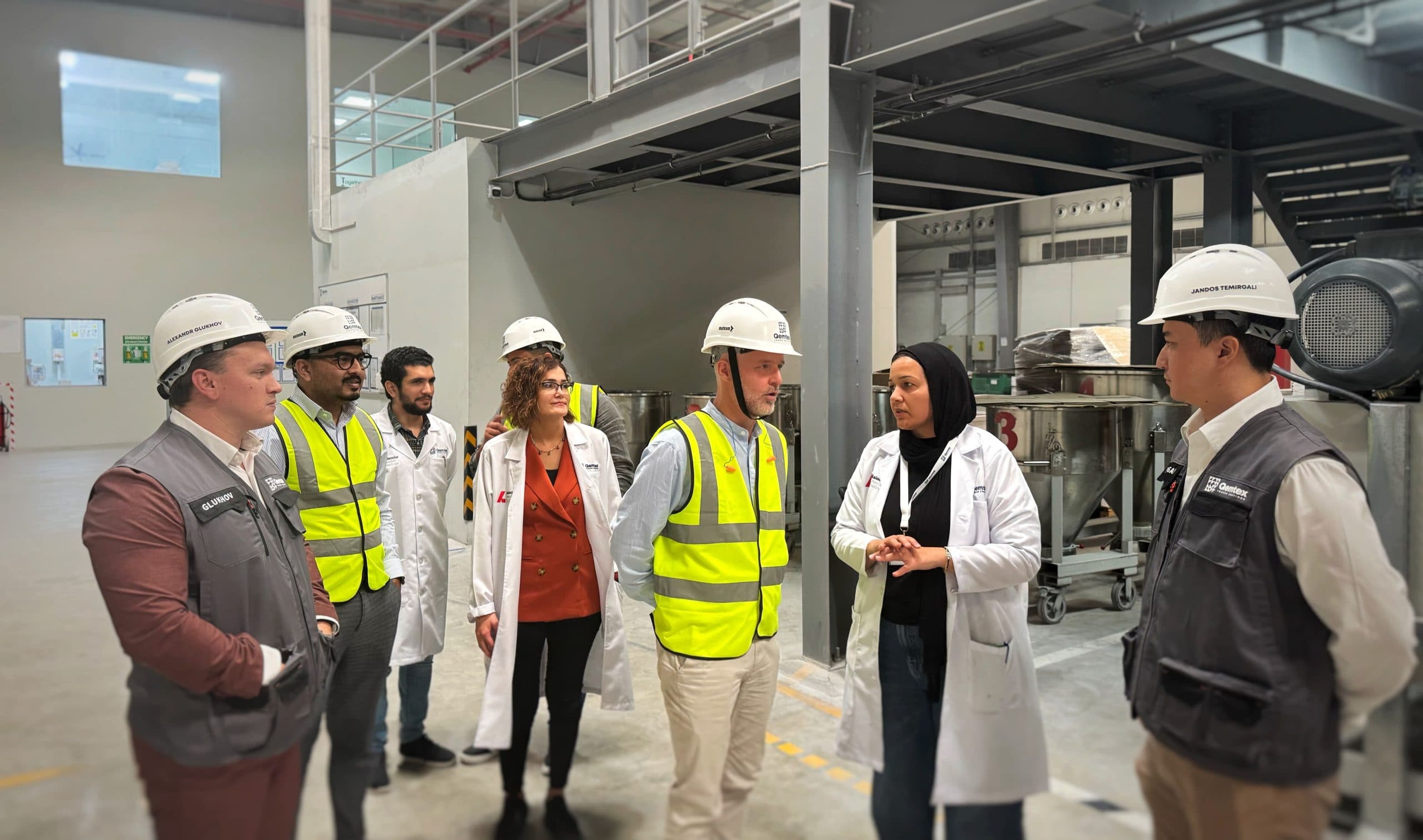
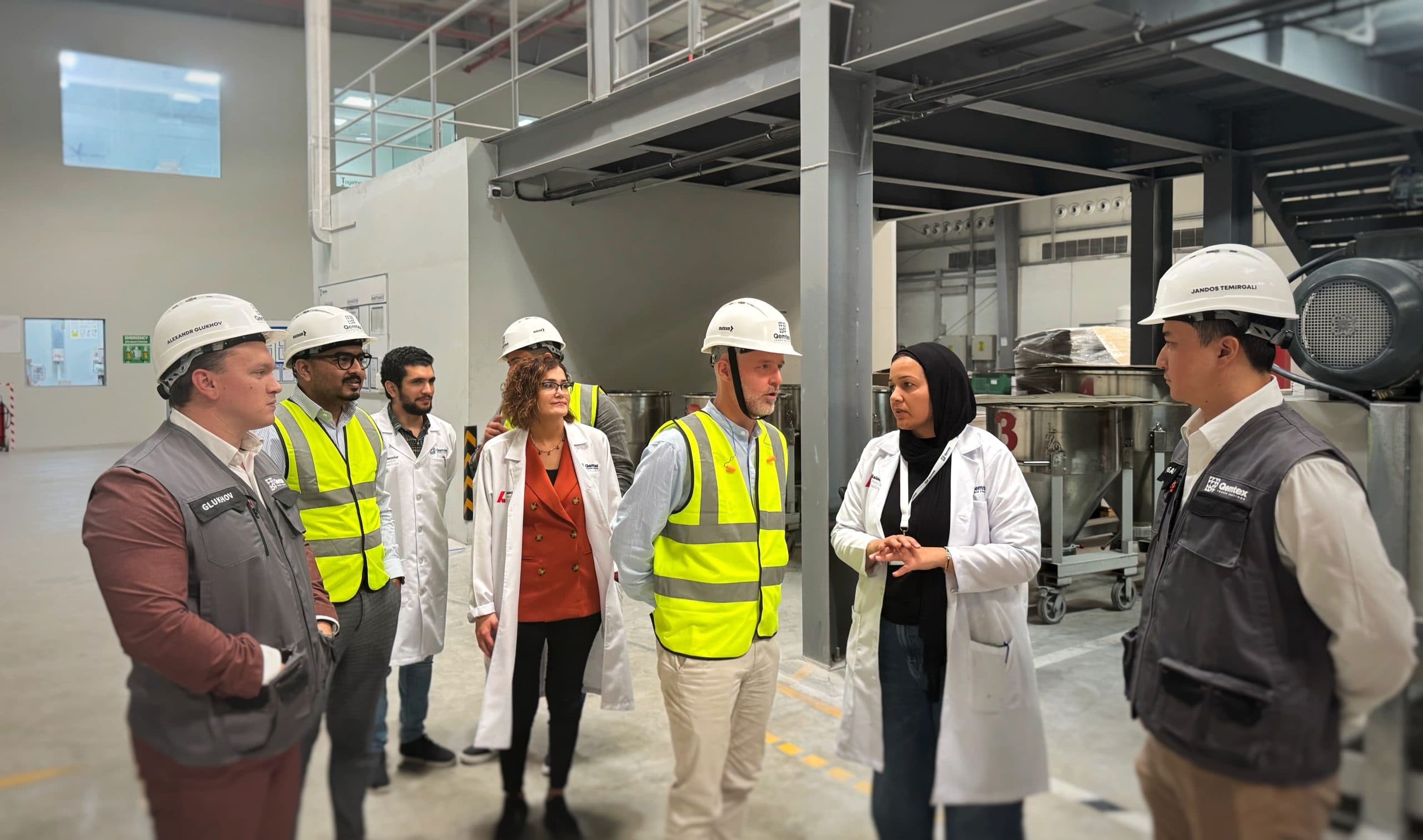
Our international presence is also developing as part of a larger plan, rather than as a collection of individual projects. Our experience in the United Arab Emirates and active development of the US market are elements of our strategy for creating an international network of competencies. Each site in this system not only serves as a production facility but also as a source of knowledge: products are tested in various climates, an understanding of local requirements is developed, and quality standards are established that can then be adapted and transferred between regions. This model allows us to maintain a consistent level of quality while scaling and serve markets of varying maturity.
Asiacolor occupies a special place in this architecture. We see the Kazakhstan site not simply as a production asset, but as an industrial hub for Central Asia — a center that accumulates best practices, establishes quality standards, invests in training and development, and serves as a knowledge platform for the entire industry.
This role is especially important in a situation where the market demands not only a product but also expertise, systems thinking, and the ability to tackle complex problems.
It is this approach — a combination of engineering depth, operational discipline, and international experience — that we see as the foundation for future growth. For us, development doesn’t mean expansion for the sake of scale, but rather deepening our competencies, which enable the industry to move forward more consciously and sustainably.
Why Experience Is More Important Than Expansion
“On the surface, you could say we’re growing, expanding, and entering new markets. But there’s a different logic behind this: we’re growing because we’re developing competencies that are in demand by the market and industry,” concluded Larissa Semenchuk.
Asiacolor’s development strategy is not a race for volume. It is a deep, consistent creation of technological maturity.